
U-Haul Gallery Year in Review
by Jack Chase
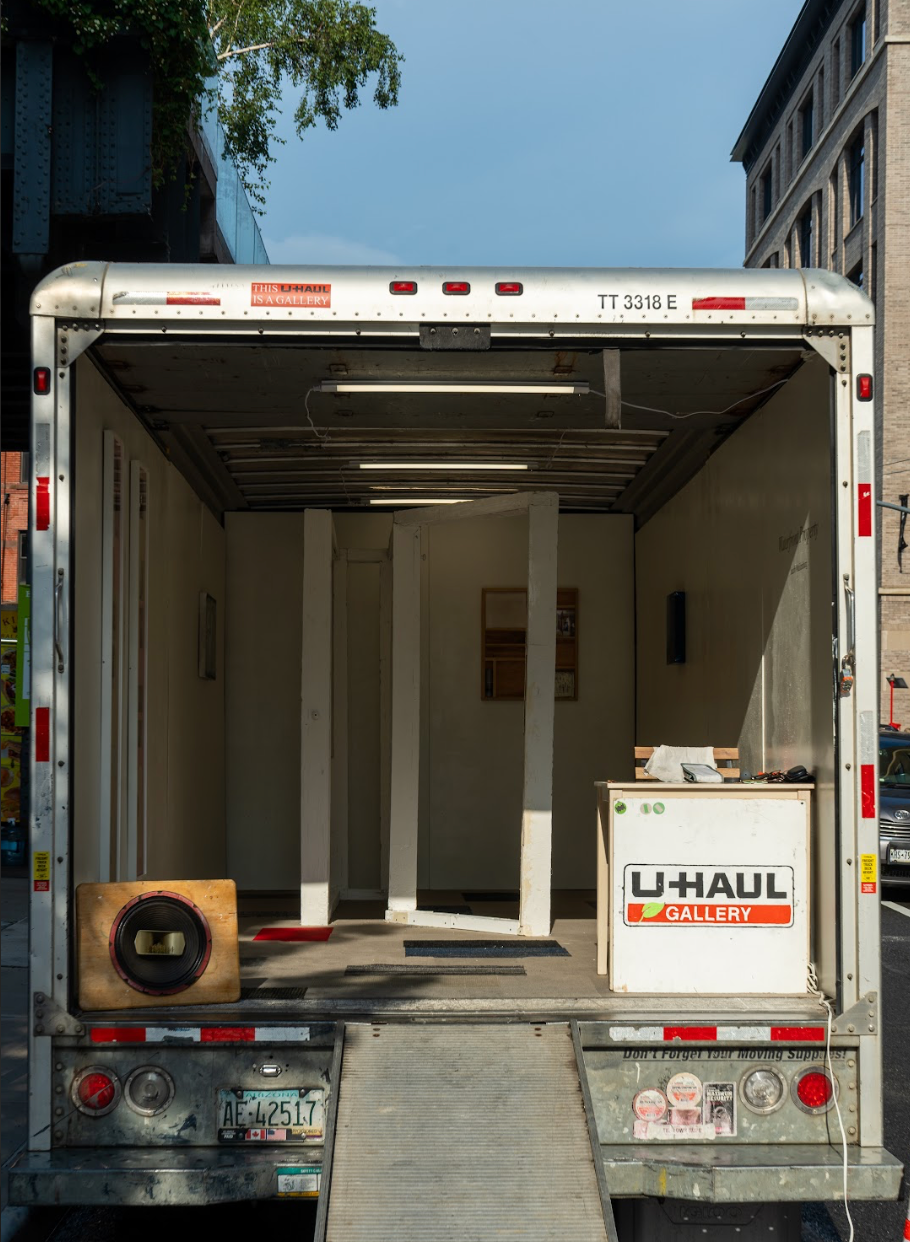
When I wrapped the U-Haul Paris show, Chuck Magazine asked me to write a piece about the show and Paris Art Week at large. I wrote a relatively long piece told through the lens of micro-mobility about how James and I’s box truck gallery operates in alignment with, and defiance of, the global arts circus. I also wrote about Smart Cars, my fascination with urban mobility, the impossibility of the box truck gallery, and all the parties people told me about but didn’t invite me to.
Chuck never published it. Maybe they will someday.
U-Haul Gallery has officially wrapped its 2025 programming. It included 13 shows, parking outside 12 art fairs, and hosting two of our own. U-Haul Gallery is an exhausting and deeply taxing project, one that demands immense physical labor and mental fortitude. We do not own the trucks that we operate out of. The entirety of the gallery’s kit exists in a Park Slope storage unit, one that we move every month, exploiting U-Haul’s offer of one month free storage for every rental.
In February 2025, we got an invitation to come to the independent film festival Slamdance. We traveled to Los Angeles to experiment with the possibility of bringing the gallery to different locale. Slamdance was a massive failure. We were regrettably parked in the back corner of the festival grounds and struggled to bridge the gap between independent filmmakers and our independent operation. Fortunately enough, Slamdance occurred at the same time as LA Art Week and we took advantage by bringing our show on the road. There we conceived the idea of the U-Haul Art Fair, sold a shocking amount of art, and began to roll the snowball that the gallery has become. Fueled by gasoline and a boundless conviction in our project, we left LA with an appetite that we have not come close to satiating.
For all of our zeal and social media gimmicks, the art world did not begin to take us seriously until we hosted our U-Haul Art Fair in September. The year prior had been an exploration of what space the U-Haul Gallery could truly occupy in the art world. We continuously posed the question “is there a better way to do all of this?” and wondered if the solution was not necessarily in a box truck, but rather in an unashamed, honest approach to arts presentation. One that is grounded in formal knowledge and rigor but freed from the trappings and social conceits associated with the art world in its current form.
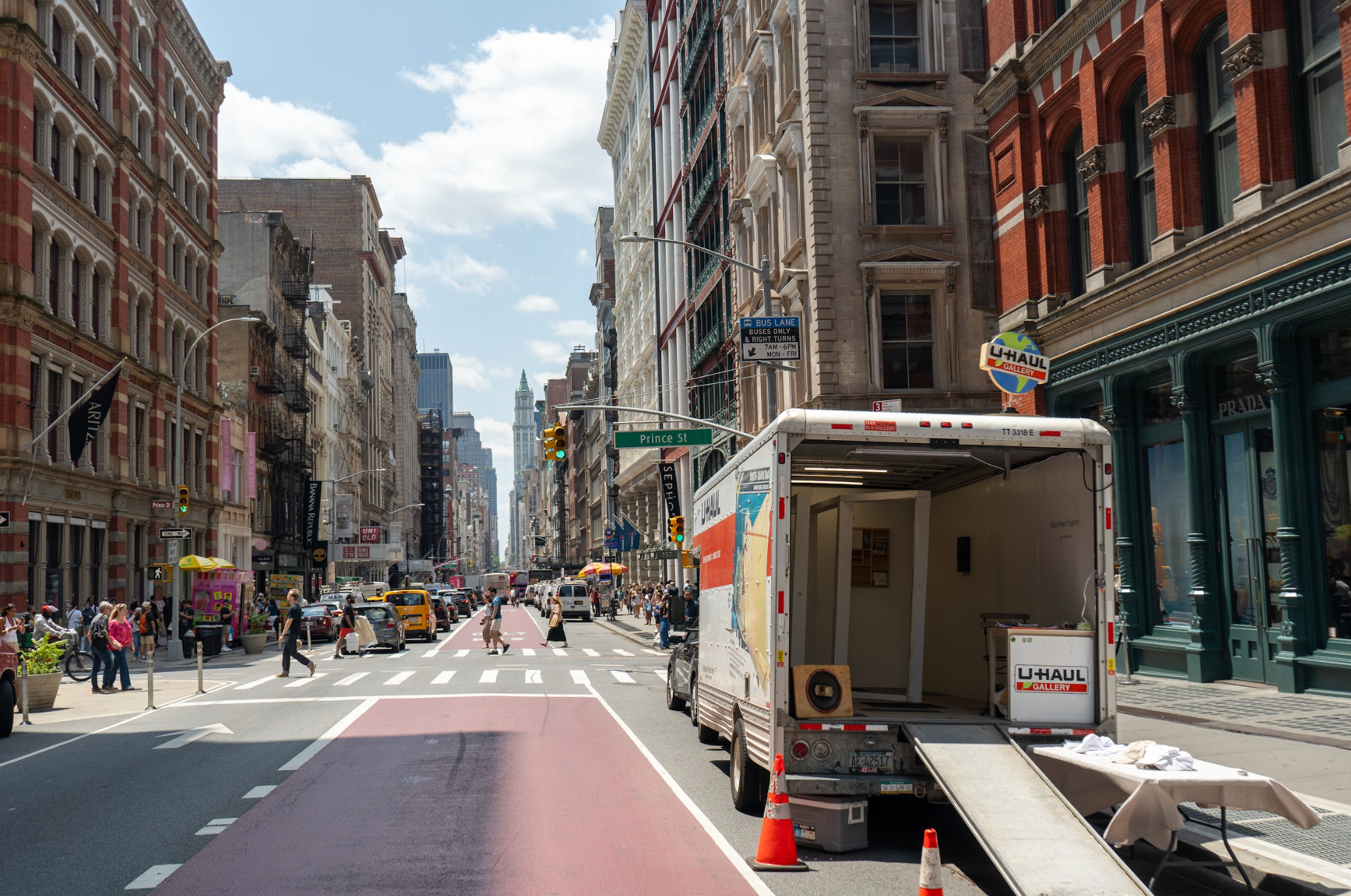
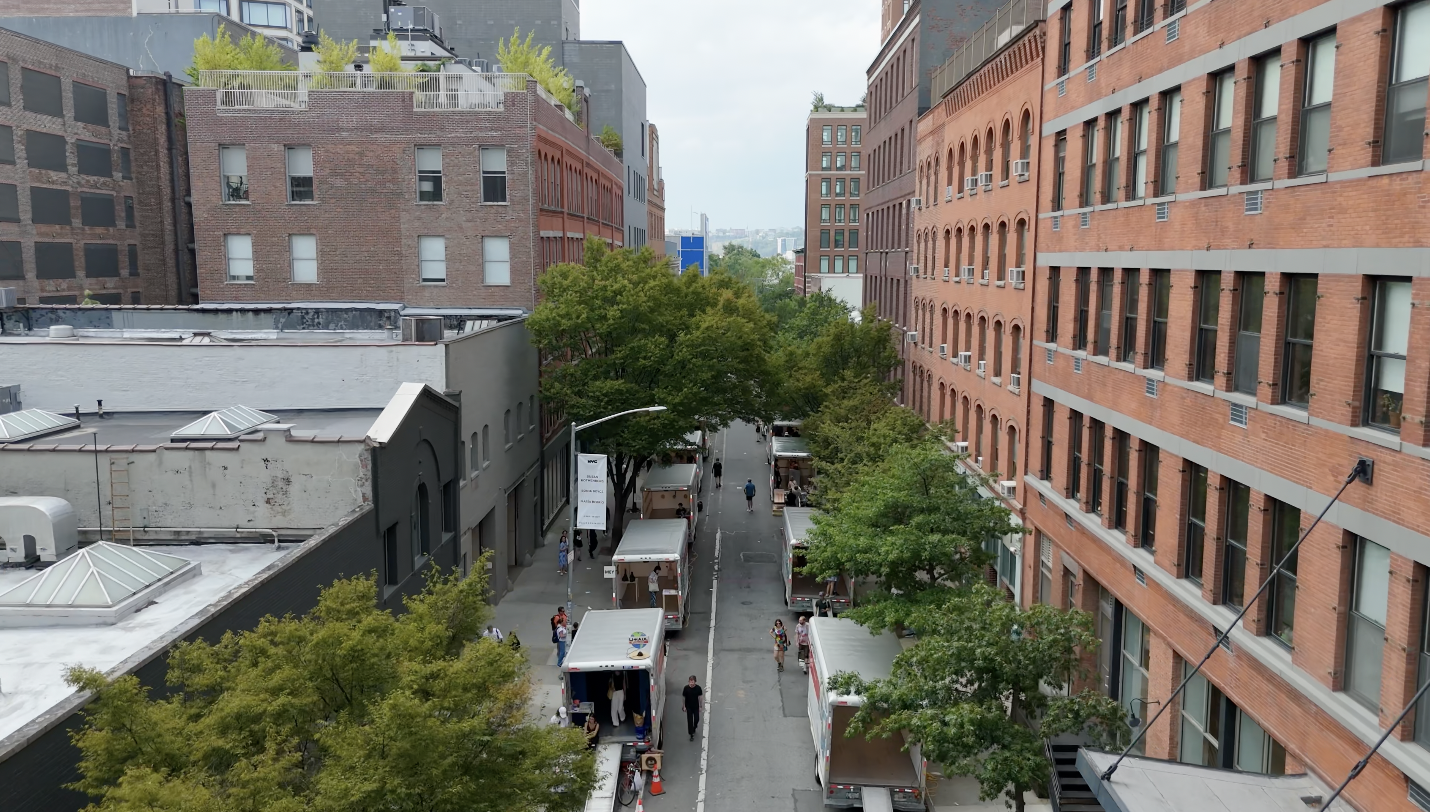
The Art Fair at its heart was an opportunity to broaden the scope of the question posed by the U-Haul Gallery. We had felt that we were beginning to effectively dig into questions of accessibility and the cultural isolation of contemporary art. The Art Fair became a platform for us to expand that thinking with the support and strength of 11 additional trucks.
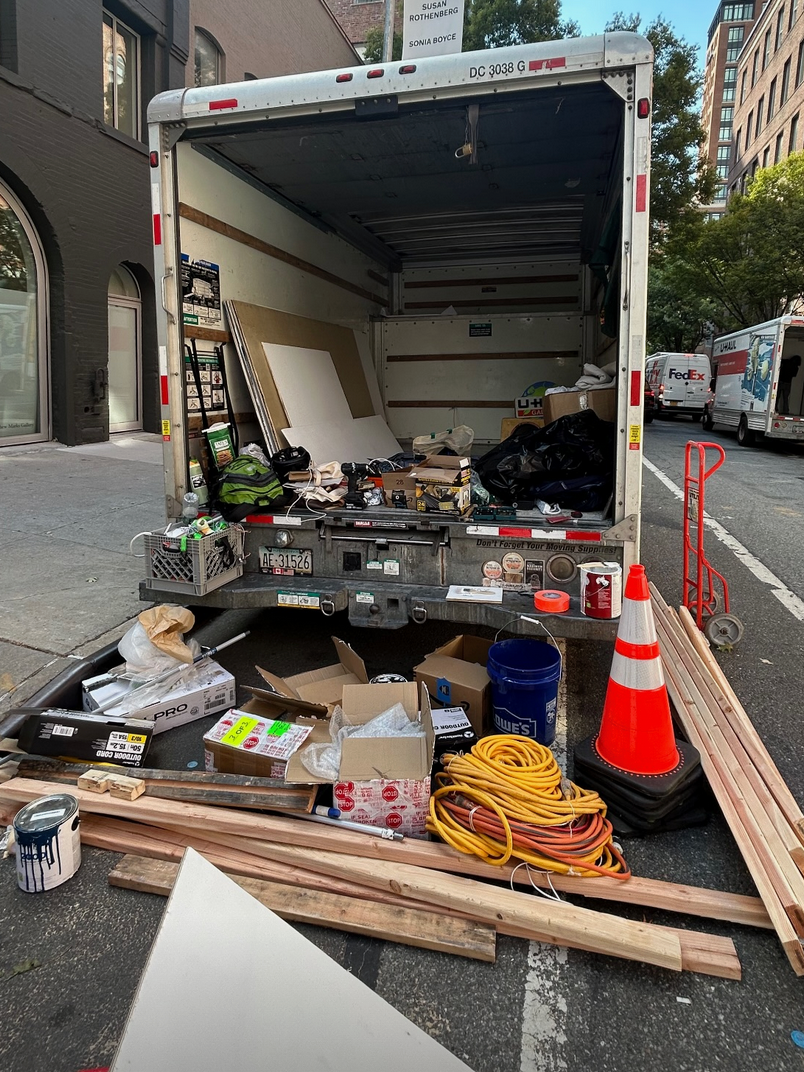
Prior to the Art Fair, we had been operating in the dark. Barring our tertiary circle of friends, we struggled to broaden our reach. We soldiered on. Driven by a desire to fully realize the project, we saw a more conceptually formalized version of the gallery that the world was waiting to catch on to. No parts of operating the gallery are easy. Each time we must negotiate with U-Haul for an extended 20’ truck rental before we pull everything out of storage and reconstruct the interior of the gallery. Each show ends with a scrambled amount of driving to and from studios and apartments before the gallery kit is unceremoniously returned to our Park Slope storage unit. With roughly a year’s worth of shows under our belts and a firm grasp of how to operate a single truck, we thought it pertinent to extrapolate that experience to 12 trucks as soon as possible.
Though we entered the run-up to the fair confident in its ability to be successful, the results shocked us. A small shockwave emanated from the fair, one that reverberated on the internet and in London, Paris, and Miami. It gave us the opportunity to continue expanding our footprint and audience. The Art Fair stole people’s hearts and minds, it showed us the power of a moving truck and the resonance that so many were feeling with us. We hosted an illegal street fair with no permits or insurance. After a year of reclaiming street corners and hydrant parking spots, we had totally taken over 22nd street in the shadow of some of the most powerful galleries on Earth.
It is no secret that the contemporary art world is hidden behind double wide glass doors and white walls. In my adult life the guardrails that have been erected around contemporary art have exacerbated significantly, to nobody’s benefit. Mega-Galleries offer museum quality shows that, while open to the public, are gate kept by social norms and conventions. We speak the same language, in opposite contexts.
During the Show of Stolen Goods, we parked the truck at the Greenpoint 5 corners. A passer-by noted to a friend that what we were doing was “probably just some instagram thing” and for better or worse that is a notion that has stuck. The past few years have seen the optimization and ubiquity of smartphones. Lived experiences are measured through online performance indicators. There are galleries that operate almost exclusively through Instagram. For many, their relationship with visual arts starts and ends with Instagram. U-Haul Gallery has an Instagram. We’re pretty good at it. But to us it serves only as a means to spread awareness of what we are doing in the real world. We haven’t figured out how to translate followers into money. What we have done is found a way to construct an earnest physical experience. One that is rooted in platforming our community and expanding our way of thinking.
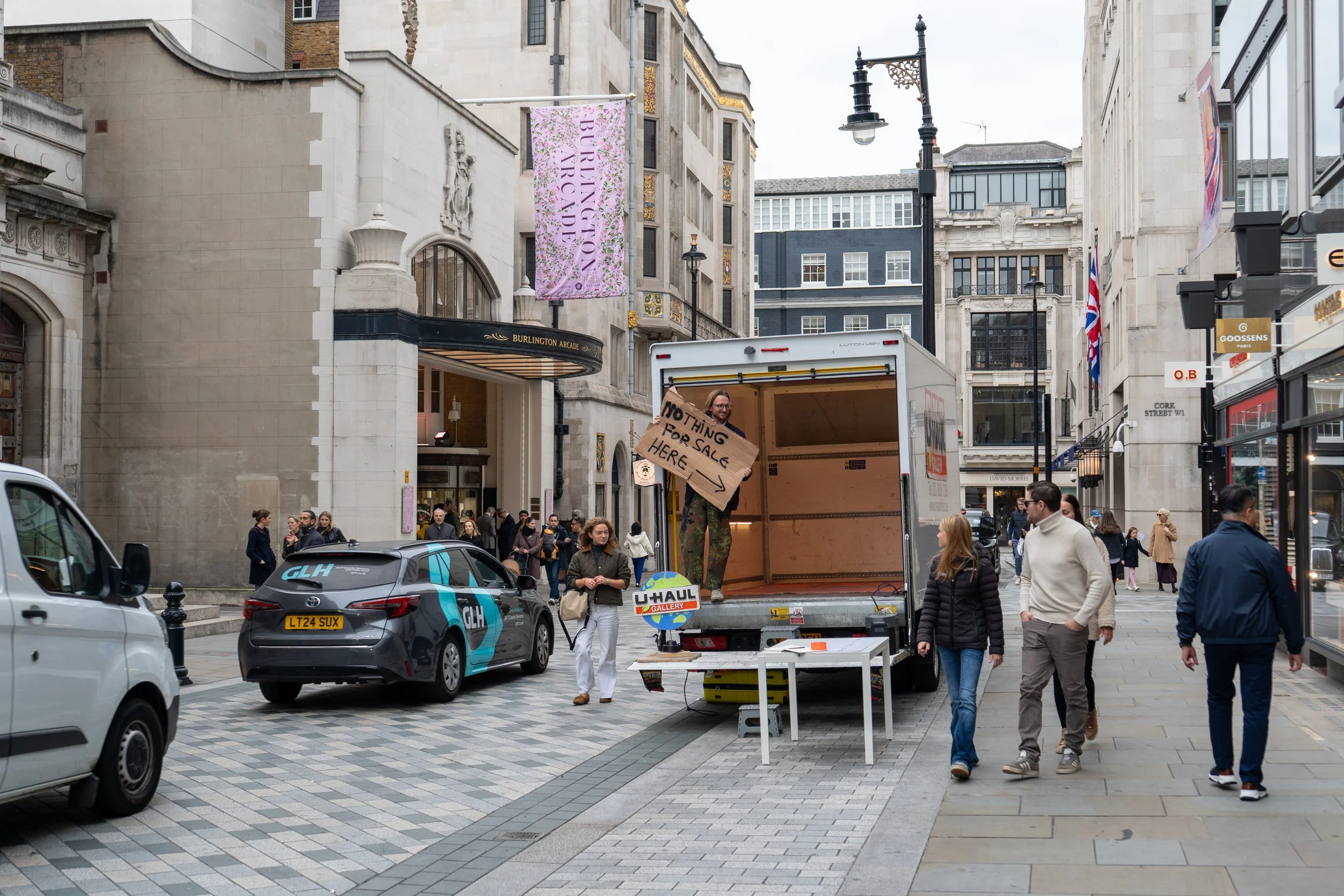
The most commonly asked question at the U-Haul Gallery is if it is free to enter, a poignant reflection of the conceptions that surround the art world today. The answer, from James and I, is always an emphatic and resounding yes.
We are a touring, non-musical band playing our non-music for the world to hear.
